
Karnataka is one of those rare states where you can stand in the ruins of a medieval empire in the morning, trek through a misty coffee estate by afternoon, and fall asleep to the sound of the sea at night. It is impossibly diverse — stretching from the Deccan plateau in the north to the Western Ghats in the west, from ancient Hoysala temple towns to the buzzing tech corridors of Bengaluru.
Whether you are a first-time visitor or a seasoned traveller looking to go deeper into South India, this guide will help you find the best places to visit in Karnataka and plan a trip that actually matches the way you like to travel. And when you are ready to book, Zuumm lets you do it with zero convenience fees — so more of your budget goes towards the journey itself.
Key Takeaways
- Karnataka offers an extraordinary range of experiences — ancient ruins, colonial hill stations, wild coffee forests, and pristine beaches all within one state.
- Hampi, Mysore, and Coorg are among the most visited Karnataka tourist places — each utterly different in character.
- The best time to visit Karnataka is October to February, when temperatures are comfortable across elevations.
- Zuumm makes planning your Karnataka trip seamless — find the best flights with zero convenience fees and build your itinerary with AI assistance.
Why Karnataka Is One of India's Most Diverse Travel Destinations?
Karnataka sits at a unique geographical and cultural crossroads. The state is bordered by six other Indian states plus the Arabian Sea, and this connectivity has shaped a place that absorbed waves of different rulers, religions, and cultural influences across centuries — Chalukyas, Rashtrakutas, Hoysalas, Vijayanagara kings, Sultans, and the British — each leaving their imprint on the land.
The result is a destination where you can explore the world's second-largest concentration of inscriptions at Hampi one day and swim at one of India's cleanest beaches at Gokarna the next. Where the city of Bengaluru runs 24/7 on technology and cold brew coffee, while just 150 km away, bullock carts still trundle down village roads in Mandya. That contrast — rapid and radical — is Karnataka's defining feature.
The Western Ghats, which run along Karnataka's western edge, form one of the world's eight biodiversity hotspots. This makes the state a significant destination for wildlife lovers, trekkers, and anyone who finds a dense, misty forest more exciting than a hotel pool.
What Makes Karnataka a Must-Visit Destination in India?
Karnataka earns its superlatives. It is called the Sandalwood State for its prized sandalwood forests centred around Mysore. It is the Silk City — Mysore's handwoven silk sarees are considered among the finest in the world. It houses India's Silicon Valley in Bengaluru. And it holds one of the most astonishing collections of UNESCO World Heritage Sites in all of South Asia.
The food culture alone is worth the trip. Udupi cuisine gave the world the masala dosa and idli-sambar. The North Karnataka region has its own distinct culinary identity — jowar rotis, jolada rotti, ennegayi (stuffed brinjal), and the gloriously fiery Dharwad peda. Mangalorean cuisine — with its coconut-based seafood curries — is in a completely separate league.
Then there is the coffee. Karnataka produces around 70 per cent of India's coffee, and the estates of Coorg and Chikmagalur are where some of the world's finest single-estate beans are grown. Drinking a cup of freshly brewed estate coffee on a misty morning in Coorg, watching clouds move through the valleys below, is one of those simple travel experiences that somehow becomes unforgettable.
Top Places to Visit in Karnataka
Bangalore — Where the Ancient and the Ultra-Modern Collide
Bengaluru, or Bangalore as most people still call it, is the city you land in before going everywhere else in Karnataka — but it deserves its own dedicated time too. The city is India's fastest-growing metropolis and the heart of its technology industry, but underneath all that hustle is a city with genuine character.
Lalbagh Botanical Garden, spread over 240 acres and home to a rare collection of tropical plants, is a morning you will not regret. Cubbon Park in the city centre offers a green, leafy escape from the traffic. The Bangalore Palace — a Tudor-style structure modelled loosely on Windsor Castle — is a quirky reminder of the princely era. And the craft beer scene and restaurant culture along Indiranagar and Koramangala are genuinely world-class.
The city also serves as the best base for day trips to Nandi Hills (a hilltop fortress and sunrise point about 60 km away), Mysore (a 3-hour drive), and Bannerghatta National Park (just 22 km from the city centre).
Best for: Food lovers, tech travellers, day-trippers, shopping enthusiasts
Mysore — Karnataka's Royal City
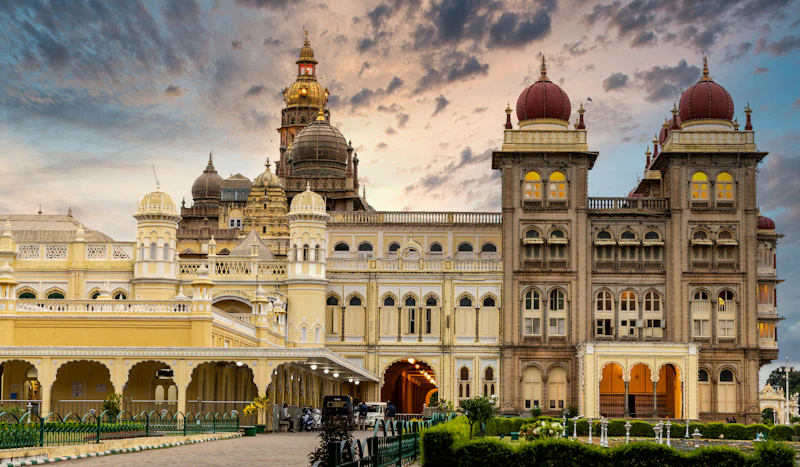
Mysore is one of those cities that genuinely lives up to its reputation. The Mysore Palace — a magnificent Indo-Saracenic structure that lights up with nearly 100,000 bulbs every Sunday and on public holidays — is one of the most visited monuments in India, and it earns every visitor. The palace interior, with its painted ceilings, stained glass, and ornate thrones, is jaw-dropping.
The city's culture is equally rich. Mysore is considered the yoga capital of India — many serious yoga practitioners come here to train under masters from lineages that stretch back generations. The city is also famous for its silk weaving, sandalwood carving, and the spectacular Dasara festival in October, when the palace is illuminated and a grand procession of elephants marches through the streets.
Chamundi Hills, rising above the city, offers panoramic views and the impressive Chamundeshwari Temple. Srirangapatna, about 16 km from Mysore, holds the legacy of Tipu Sultan — his summer palace, his fort, and his tomb all in one compact and historically layered area.
Best for: History lovers, culture enthusiasts, families, photographers
Coorg — India's Coffee Country
Coorg (officially Kodagu) is the kind of place that makes you want to extend your stay every single day. Tucked into the Western Ghats about 250 km from Bengaluru, this is Karnataka's premier hill station — and one that is defined by coffee estates, rice paddies, and a warrior community called the Kodavas, who have their own distinct language, cuisine, and martial tradition.
The drives here are exceptional — winding roads through silver oak forests, with occasional viewpoints where the valley drops away beneath you. The Abbey Falls near Madikeri, the Raja's Seat viewpoint, and the Namdroling Monastery (a stunning Tibetan Buddhist temple in Bylakuppe) are among the key stops.
But Coorg is ultimately about slowing down. Stay in a plantation homestay, walk through the coffee rows in the early morning mist, eat a traditional Kodava pork curry, and if you are feeling adventurous, attempt the Tadiandamol Peak trek — the highest point in Coorg.
Best for: Couples, nature lovers, foodies, trekkers
Hampi — A UNESCO World Heritage Site Like No Other
Hampi is not just a destination — it is a pilgrimage for anyone who loves history, architecture, or simply vast, otherworldly landscapes. The ruins of the Vijayanagara Empire, which at its peak in the 15th and 16th centuries was one of the richest and most powerful kingdoms in Asia, are scattered across a surreal terrain of massive granite boulders and banana plantations along the Tungabhadra River.
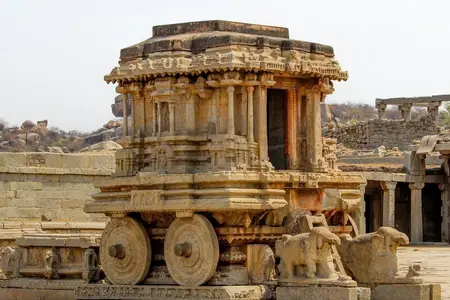
The Virupaksha Temple at the heart of the site is still an active place of worship and has been continuously in use for over 700 years. The Vittala Temple, with its famous Stone Chariot and musical pillars, is an architectural masterpiece. The Royal Enclosure, the Elephant Stables, the Zenana Enclosure — every ruin here is a story.
Hampi is also a destination for rock climbers — the enormous boulders that dot the landscape offer routes for every level of climber. Staying on the Virupapura Gaddi island across the river, with its quiet guesthouses and evening bonfire culture, is an essential part of the Hampi experience.
Best for: History buffs, photographers, rock climbers, backpackers
Chikmagalur — The Coffee Hills of Karnataka
Chikmagalur is where Indian coffee began. Baba Budan, a Sufi saint, is said to have brought seven coffee beans from Yemen to these hills in the 17th century, planting them on what is now called Baba Budan Giri. Today, the Chikmagalur district produces some of India's finest arabica and robusta coffee, grown at elevations between 900 and 1,800 metres.
The Mullayanagiri Peak, at 1,930 metres the highest point in Karnataka, offers an exhilarating trek with views stretching across the entire Western Ghats range. The Hebbe Falls, Bhadra Wildlife Sanctuary, and Kudremukh National Park are all within reach. The famous Z-point viewpoint near Kemmanagundi offers some of the most dramatic valley views in the state.
Homestays on working coffee estates — where you can wake up to the smell of blooming coffee, help with the harvest in season, and eat home-cooked meals — are among the best accommodation experiences in Karnataka.
Best for: Nature lovers, trekkers, coffee enthusiasts, photographers
Gokarna — The Spiritual Beach Town
Gokarna exists in that perfect intersection between temple town and beach destination. It has been an important pilgrimage site for centuries — the Mahabaleshwara Temple here houses what is believed to be one of the original Shiva lingas from Hindu mythology. The town is genuinely devout, and the morning rituals along the beach ghats have a quiet sanctity that you do not find at more commercialised destinations.
And then there are the beaches. Om Beach, Half Moon Beach, and Paradise Beach are accessible only by foot or boat, which keeps them wonderfully unspoiled. Kudle Beach is gentler and more accessible, great for families. The dramatic red cliffs that line the coastline make Gokarna's scenery genuinely spectacular.
Gokarna attracts backpackers, pilgrims, and travellers who want authentic coastal Karnataka without the crowds of Goa just to the north.
Best for: Beach lovers, backpackers, spiritual seekers, photographers
Udupi — Where Temple Cuisine Meets Coastal Karnataka
Udupi punches well above its weight as a travel destination. This small coastal town in the Tulu Nadu region is famous for two things: the Sri Krishna Temple, one of the eight sacred Vaishnava temples established by the philosopher-saint Madhvacharya in the 13th century, and Udupi cuisine, which gave the entire world idli, dosa, and sambar in their most refined form.
The temple experience here is deeply immersive — devotees crowd the complex at dawn and dusk for the kannadi kindi darshan (viewing the idol through a hole in a brass window). The temple kitchen (madrasa) feeds thousands of pilgrims daily with exceptional vegetarian food.
The nearby beaches — Malpe, Kapu, and St. Mary's Islands (a group of basalt rock formations accessible by boat from Malpe) — are among Karnataka's most scenic and least crowded.
Best for: Culture lovers, foodies, beach seekers, spiritual travellers
Sakleshpur — The Trek-Lover's Karnataka
Sakleshpur sits in the Hassan district of Karnataka, at about 900 metres elevation in the Western Ghats, and it is one of the most rewarding trekking destinations in South India. The Sakleshpur to Donigal heritage railway trek — walking along a disused British-era railway track through tunnels, over bridges, and through dense shola forests — is a legendary route among trekking communities.
The Bisle Ghat viewpoint, about 27 km from Sakleshpur, offers one of the most breathtaking views in the Western Ghats — on clear days, you can see three states from a single viewpoint. The Manjehalli and Hadlumane waterfalls are excellent monsoon destinations. The entire Sakleshpur region is covered in tea, coffee, pepper, and cardamom estates that make for gorgeous, winding drives.
Best for: Trekkers, adventure seekers, monsoon travellers
Madikeri — The Heart of Coorg
Madikeri is the district headquarters of Coorg and the natural base for exploring the region. The town itself sits on a ridge at around 1,100 metres, surrounded by hills and coffee estates. The Madikeri Fort — originally built by Mudduraja in the 17th century and later renovated by Tipu Sultan — overlooks the town and houses a small museum.
The Abbey Falls, just 8 km from Madikeri, is a beautiful waterfall surrounded by private coffee and spice estates. Raja's Seat, a garden viewpoint where the Coorg kings reportedly watched the sunset, offers panoramic valley views especially at dusk. The Omkareshwara Temple — a blend of Gothic and Islamic architecture — reflects the multi-cultural influences that shaped this region.
Best for: Couples, nature lovers, history enthusiasts
Kanakapura — Cauvery Rafting and Rocky Trails
Kanakapura, about 60 km from Bengaluru, is the adventure playground of Karnataka's capital. The Cauvery River flows through here, offering excellent white-water rafting between October and February. The rocky landscape around Ramanagara — where the film Sholay was famously shot — is a rock climbing and bouldering destination with routes for every level.
The Bheemeshwari Wildlife Sanctuary and Fishing Camp, set on the banks of the Cauvery, is one of Karnataka's best wildlife experiences — home to mahseer fish, otters, crocodiles, and over 200 bird species. Night stays at the forest camp here are genuinely special.
Best for: Adventure seekers, weekend getaway from Bengaluru, birdwatchers
Kabini — Where the Wildlife Is Extraordinary
Kabini is quite simply one of the finest wildlife destinations in India. Located on the southern edge of the Nagarhole National Park — part of the Nilgiri Biosphere Reserve — this area around the Kabini reservoir is famous for elephant herds that gather in large numbers during the dry season, and for having one of the highest densities of tigers and leopards in the country.
The safari experience here, conducted by Karnataka Forest Department boats and jeeps, is reliably excellent. The sight of 50 to 80 elephants gathering at the reservoir as the sun sets — what locals call the 'Kabini spectacle' — is among the most dramatic wildlife moments in all of India.
Stay options range from the iconic The Serai and Bison River Resort to the Forest Department camps. The upmarket options book out months in advance during peak season (October to May).
Best for: Wildlife enthusiasts, photographers, luxury nature travellers
Mangalore — The Gateway to the Coast
Mangalore (Mangaluru) is Karnataka's main coastal city and a cultural and culinary destination in its own right. Tulu Nadu culture, which encompasses Mangalore and the surrounding region, has its own language, cuisine, theatre (Yakshagana), and ritual traditions (Bhuta Kola spirit worship).
The food here is exceptional — Mangalorean fish curry, kori rotti (dry coconut chicken with wafer-thin rice crisps), prawn ghee roast, and the legendary Mangalore buns are all dishes that serious food travellers plan trips around. The Panambur and Tannirbhavi beaches are pleasant, and the Kadri Manjunatha Temple is one of the oldest temples in the state.
Mangalore also serves as the jumping-off point for Udupi (60 km), Dharmasthala (75 km), and the incredibly scenic Coastal Karnataka road trip.
Best for: Foodies, culture lovers, coastal explorers
What Does the Ideal Karnataka Tour Itinerary Look Like?
Itinerary 1 — Heritage and Culture (5 Days)
Day 1: Arrive in Bengaluru and explore the city with visits to Lalbagh Botanical Garden and Bangalore Palace. In the evening, enjoy local cafes or a relaxed walk.
Day 2: Drive to Mysore. En route, stop at Srirangapatna to explore historical sites linked to Tipu Sultan. Reach Mysore and visit the iconic Mysore Palace and local markets.
Day 3: Head to Coorg, known for its scenic beauty. On arrival, relax at your resort and enjoy the peaceful coffee plantation surroundings.
Day 4: Visit Abbey Falls, Raja’s Seat, and Dubare Elephant Camp. Spend the day soaking in nature and local culture.
Day 5: Drive back to Bengaluru and depart.
Itinerary 2 — Nature and Adventure (6 Days)
Day 1: Arrive in Bengaluru and drive to Chikmagalur. Check into a coffee plantation stay and spend the evening relaxing amidst greenery and fresh mountain air.
Day 2: Start early with a trek to Mullayanagiri Peak in Chikmagalur. Later, visit Baba Budangiri for caves and panoramic views. Enjoy sunset viewpoints and plantation walks.
Day 3: Drive to Coorg via scenic routes. Check into a resort and relax. Evening at leisure in the midst of coffee estates.
Day 4: Visit Dubare Elephant Camp for an interactive wildlife experience in Coorg. Go for river rafting (seasonal) in the Barapole River. End the day at Raja’s Seat for a beautiful sunset.
Day 5: Explore Abbey Falls and nearby forest trails in Coorg. You can also opt for a coffee plantation tour or light trekking.
Day 6: From Chikmagalur Drive back to Bengaluru and depart.
Itinerary 3 — Coastal Karnataka (4 Days)
Day 1: Arrive in Yercaud and check into your hotel. Spend a calm afternoon at Yercaud Lake, where you can enjoy boating and a relaxed walk. Explore nearby local markets and enjoy a quiet evening in the cool hill weather.
Day 2: Start your day with a visit to Lady's Seat for panoramic valley views. Continue to Pagoda Point and then explore the beautiful Anna Park and Orchidarium. Keep the evening free to relax.
Day 3: Visit the scenic Kiliyur Falls (best after monsoon). Later, explore coffee plantations or take a peaceful nature walk through forest trails. You can also visit viewpoints like Gents Seat for sunset.
Day 4: Enjoy a slow morning with a final stroll around the hills or revisit your favorite spot. After breakfast, check out and depart with refreshing memories of Yercaud.
When Is the Best Time to Visit Karnataka?
- October to February (Peak Season): Best time to visit Karnataka with pleasant weather (15–28°C). Ideal for Hampi, Mysore, coastal regions, and peak wildlife sightings in Kabini & Nagarhole.
- June to September (Monsoon): Perfect for lush greenery in Coorg, Chikmagalur, and Sakleshpur. Waterfalls are at their best, though coastal areas receive heavy rainfall. Bengaluru and Hampi remain accessible.
- March to May (Summer): Hot across most regions but suitable for hill stations. Plan visits around festivals like Mysore Dasara (Oct) and Hampi Utsav (Nov) for a cultural experience.
What Are the Best Travel Tips for Visiting Karnataka?
1. Travel by road for flexibility: Most top destinations from Bengaluru are 3–5 hours away. A self-drive car or driver lets you explore scenic stops easily.
2. Eat local cuisine: Try regional specialties—Udupi dosas, Coorg’s Kodava meals, and fresh seafood in Mangalore.
3. Book safaris in advance: Wildlife safaris in Kabini and Nagarhole National Park fill quickly (especially Oct–Feb). Book early.
4. Respect local culture: At temples, dress modestly, remove footwear, and check photography rules.
5. Plan by season: Oct–Feb ( Best overall weather ), Monsoon: Great for greenery (Coorg, Chikmagalur), Summer (Better for hill stations)
6. Don’t rush destinations: Places like Coorg, Chikmagalur, and Gokarna are similar in vibe—pick fewer and explore deeply.
7. Explore beyond tourist hotspots: Discover gems like Belur, Halebid, and Badami for unique architecture and history.
Karnataka is one of India's most rewarding travel states — and the best way to explore it starts with getting there smartly. Book your flights on Zuumm with zero convenience fees, and start planning a trip that goes well beyond the obvious.
Frequently Asked Questions
Mysore is Karnataka’s most famous destination, while Hampi, Coorg, and Bengaluru are also top contenders.
October to February is the best time to visit Karnataka, with pleasant weather, excellent wildlife sightings, and festivals like Mysore Dasara and Hampi Utsav enhancing the experience.
For a 2-day Karnataka trip, Mysore (Palace, Chamundi Hills) and Coorg (Abbey Falls, estates) is ideal, or opt for a Bengaluru city tour with a Nandi Hills sunrise.
Top trekking spots in Karnataka include Mullayanagiri, Tadiandamol, Kumara Parvatha, Sakleshpur railway trail, Brahmagiri, and Kodachadri.
Bengaluru is the most visited city, while Mysore, Coorg, and Hampi are the top leisure and heritage destinations in Karnataka.
The best beaches in Karnataka include Om Beach, Half Moon Beach, Paradise Beach, Murudeshwar Beach, Malpe Beach, Kapu Beach, and Panambur Beach.