
Key Takeaways
- Kerala is home to some of India's most iconic landscapes — from the serene Alleppey backwaters to the misty peaks of Munnar.
- Whether you're a couple seeking romance, a family planning a memorable vacation, or a solo traveller craving adventure, Kerala has a destination tailored for you.
- The best time to visit Kerala is between October and March, when the weather is cool, clear, and perfect for outdoor exploration.
- Planning a Kerala trip is easier than ever with Zuumm, which lets you book flights with zero convenience fees.
Why Is Kerala One of India's Most Loved Travel Destinations?
There’s a reason travelers keep returning to Kerala — it offers everything in one place. Start your day on a serene houseboat in the backwaters, explore aromatic spice plantations by afternoon, and end with a mesmerizing Kathakali performance.
Nestled between the Western Ghats and the Arabian Sea, Kerala is a lush paradise of tea gardens, wildlife, coconut groves, and coastal villages. Its culture is calm and rooted — Ayurveda is a lifestyle, the food is rich in coconut flavors, and the hospitality is truly warm.
Well-connected by airports in Kochi, Thiruvananthapuram, and Kozhikode, Kerala is easy to reach and even better to explore, with scenic drives that make every journey memorable.
What Are the Best Places to Visit in Kerala for Every Type of Traveller?

Kerala does not have a one-size-fits-all kind of travel experience — and that is exactly its charm. Explore the best destinations tailored to each traveller type:
- For Couples: Alleppey, Varkala, Kumarakom
Activity to explore: Romantic houseboat stays, stunning cliffside sunsets, and serene backwater experiences - For Families : Kochi, Munnar, Thekkady
Activity to explore: A mix of history, nature, wildlife safaris, and scenic tea gardens — perfect for all age groups - For Solo Travellers: Wayanad, Kannur, Varkala
Activity to explore: Offbeat destinations, adventure trails, and relaxed beach vibes - Adventure Seekers: Wayanad, Munnar, Thekkady
Activity to explore: Trekking, zip-lining, jungle camping, and thrilling jeep safaris - Culture Lovers: Kochi, Thrissur, Kannur
Activity to explore: Colonial charm in Fort Kochi, vibrant festivals like Thrissur Pooram, and traditional Theyyam performances.
Top Places to Visit in Kerala
Alleppey — The Backwater Capital of Kerala
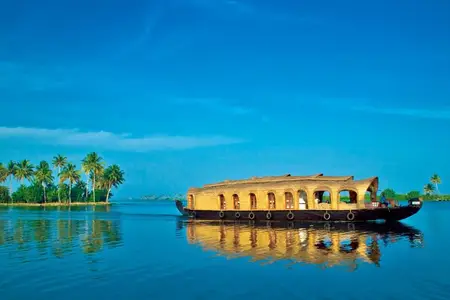
Alleppey perfectly captures Kerala’s charm — serene backwaters, swaying palms, and traditional houseboats drifting through lush canals. A houseboat stay here is a calming, immersive experience with scenic sunsets, soothing sounds of nature, and authentic Kerala meals. Centered around the vast Vembanad Lake, Alleppey also hosts the vibrant Nehru Trophy Boat Race in August. Beyond the backwaters, its quiet beaches make it an ideal destination to truly unwind and disconnect.
Best for: Couples, slow travellers, photography enthusiasts
Munnar — Kerala's Most Scenic Hill Station
Munnar sits at around 1,600 metres above sea level in the Idukki district, and the moment your car climbs the last hairpin bend and the valley opens up before you — tea gardens rolling endlessly in every shade of green — you will understand why people lose words here. It is simply stunning.
This hill station was developed by the British as a tea-growing region in the 19th century, and today it remains the largest tea-growing estate in south India. You can walk through the Kolukkumalai tea estate (the world's highest), visit the Tea Museum, and sample freshly brewed tea with a view that seems almost too perfect to be real.
Munnar is also home to Eravikulam National Park, where the critically endangered Nilgiri Tahr roams freely. In February and March, the surrounding hills burst into purple when the Neelakurinji flowers bloom — an event that happens only once every twelve years. The Mattupetty Dam, Atukkad Waterfalls, and Top Station viewpoint are other must-sees.
Best for: Nature lovers, couples, trekkers, families
Wayanad — Where Forests and Waterfalls Meet Culture
Wayanad is the kind of place that feels slightly off the beaten path even though it is entirely on the map. Tucked into the Western Ghats, this district is a gorgeous patchwork of coffee estates, bamboo forests, mist-covered mountains, and ancient tribal settlements.
The Edakkal Caves here contain some of India's most remarkable prehistoric rock engravings — evidence of human settlement that dates back thousands of years. The Chembra Peak trek takes you through lush green hills to a heart-shaped lake near the summit. Soochipara and Meenmutty waterfalls are spectacular after the monsoons. And the Wayanad Wildlife Sanctuary is one of the better places in Kerala to spot wild elephants, tigers, and leopards.
What makes Wayanad truly special is the tribal cultural experience. Many resorts and community homestays offer guided village walks and insight into the lives of indigenous communities like the Kurichiya and Paniya tribes. It is authentic, respectful, and genuinely moving.
Best for: Solo travellers, adventure seekers, culture explorers
Kochi (Cochin) — Kerala's Cultural and Commercial Heart
Kochi is where Kerala's layered history becomes tangible. Walk through Fort Kochi's narrow lanes and you will pass a 16th-century Portuguese church, a centuries-old Jewish synagogue, Dutch colonial bungalows, and Chinese fishing nets still in daily use. It is a place where civilizations collided and somehow blended into something entirely its own.
The city's art scene is vibrant — the Kochi-Muziris Biennale, held every two years, is Asia's largest contemporary art event and transforms the streets and warehouses of Fort Kochi into immersive art spaces.
On the food front, Kochi is a revelation. From fresh seafood at Vypeen Island to the legendary beef biryani in Mattancherry to the filter coffee at an old Irani cafe — every meal is a story. The ferry rides between Ernakulam and Fort Kochi are a budget travel experience that somehow feels like the most romantic thing in the world at sunset.
Best for: Culture lovers, foodies, history enthusiasts, families
Thekkady — Wildlife and Spice Gardens in One Destination
Thekkady sits on the edge of Periyar National Park — one of India's finest wildlife reserves — and it is a place that rewards the curious. The most popular activity here is a morning boat ride on Periyar Lake, where herds of wild elephants often come down to the water's edge. You might also spot sambar deer, langurs, and if you are very lucky, a sloth bear or tiger along the shoreline.
But Thekkady is just as much about spices as it is about wildlife. The rolling hills around town are covered in cardamom, black pepper, cinnamon, nutmeg, and clove plantations. A guided spice garden walk is absolutely worth your time — you will never look at your kitchen spice rack the same way again.
The town also offers bamboo rafting, tribal trekking, and Kalaripayattu demonstrations — one of the world's oldest martial art forms, which originated right here in Kerala.
Best for: Nature lovers, families, wildlife enthusiasts, adventure seekers
Kovalam — Kerala's Most Famous Beach Destination
Kovalam is Kerala's most well-known beach town, and it has earned that reputation. Just 16 kilometres from Thiruvananthapuram, it sits on a natural bay with a distinctive lighthouse perched on its rocky southern end. The crescent-shaped Lighthouse Beach is the most popular — dotted with cafes, Ayurvedic massage parlours, and colourful fishing boats being dragged up the sand.
Hawa Beach and Samudra Beach offer slightly quieter alternatives for those who want to avoid the crowds. Kovalam has also long been an Ayurveda destination — the town is lined with wellness centres offering everything from a quick massage to a full two-week panchakarma detox.
Watching the sunset from the rocks near the lighthouse, with the sea turning gold and the fishing boats heading out, is one of those travel moments that stays with you a long time.
Best for: Beach lovers, wellness seekers, couples
Varkala — The Cliff Beach That Stands Apart
Varkala is unlike any other beach in Kerala, and honestly, unlike any other beach in India. Here, the beach sits at the base of dramatic red laterite cliffs that drop sharply down to the sea. Along the cliff top, a string of restaurants, yoga studios, and boutique shops overlooks the ocean — making every meal or cup of chai into a sunset viewing experience.
Papanasam Beach, the main beach, is considered sacred — a dip here is believed to wash away sins according to Hindu tradition. The Janardana Swami Temple, one of the oldest in Kerala, sits right above the sea, adding a spiritual dimension to the destination that feels genuine, not performed.
Varkala draws a mix of backpackers, spiritual seekers, and travellers who want the beach experience with a bit more character than your average resort strip. The vibe is laid-back and real.
Best for: Solo travellers, backpackers, spiritual seekers
Thrissur — The Cultural Capital of Kerala
If you want to understand Kerala's soul, spend a few days in Thrissur. This city does not try to be a tourist destination — it simply is one, because it has been the cultural and religious heartbeat of the state for centuries.
The Thrissur Pooram festival, held every April-May at the Vadakkunnathan Temple, is widely considered the grandest temple festival in India. Thousands of caparisoned elephants, thunderous percussion ensembles (chenda melam), and spectacular fireworks displays draw people from across the world. If your visit coincides with this event, do not miss it under any circumstances.
Beyond the festival, Thrissur has excellent museums, the famous Kerala Sangeetha Nataka Akademi, and is the base for exploring nearby attractions like Athirapally Falls — arguably Kerala's most magnificent waterfall — and the Peechi-Vazhani Wildlife Sanctuary.
Best for: Culture enthusiasts, festival lovers, day-trippers from Kochi
Kannur — Unexplored Beaches and Theyyam Rituals
Kannur sits in northern Kerala, still slightly off the standard tourist trail, and that is precisely what makes it such a rewarding destination. The beaches here — Muzhappilangad Drive-in Beach (India's only drive-in beach!), Payyambalam Beach, and Thottada — are long, clean, and beautifully uncrowded.
But Kannur's true magic is Theyyam. This is not a cultural performance put on for tourists — it is a centuries-old ritualistic art form where performers, believed to be possessed by divine spirits, don elaborate costumes, towering headgear, and enter a trance-like state during outdoor shrines and village ceremonies. Witnessing a Theyyam between November and May is one of the most intense and unforgettable cultural experiences in all of India.
Kannur is also known for its handloom weaving tradition and cashew processing industries. The Arakkal Museum, documenting the history of Kerala's only Muslim royal family, is a fascinating stop.
Best for: Culture lovers, off-beat travellers, beach seekers
Kumarakom — A Quiet Backwater Escape Near Vembanad Lake
Kumarakom is Alleppey's quieter, more refined sibling. Situated on the eastern shore of Vembanad Lake — the largest lake in Kerala — it is a village of backwater channels, paddy fields, and luxury resorts that blend seamlessly into the landscape.
The Kumarakom Bird Sanctuary attracts an impressive array of migratory birds between November and February, including Siberian storks, egrets, herons, and teals. A morning canoe ride through the sanctuary's waterways is serene and deeply peaceful. Houseboat cruises here tend to be more exclusive and less crowded than Alleppey, making it a favourite among honeymooners and anniversary travellers.
Kumarakom village itself is worth exploring on a bicycle — winding lanes through rubber plantations and small settlements give you a glimpse of authentic Kerala village life that few tourists experience.
Best for: Couples, luxury travellers, bird watchers
Kozhikode (Calicut) — The City of Spices and History
Kozhikode is a city with an extraordinary history. This was the landing point of Vasco da Gama in 1498 — the moment that changed global trade routes forever. The Zamorins who ruled Kozhikode were among the most powerful rulers on the Malabar Coast, and the city's role in the spice trade made it one of the wealthiest ports in medieval Asia.
Today, Kozhikode is a wonderfully liveable city with a thriving food culture. Kozhikodan halwa and Malabar biriyani are famous across South India, and the city's beach road cafes serve some of the finest seafood in Kerala. The Beypore Urpalam, a traditional boat-building yard where wooden dhows have been constructed for over 1,500 years, is a jaw-dropping cultural site.
Best for: History lovers, foodies, cultural explorers
What Are the Top Things to Do in Kerala Beyond Sightseeing?
Kerala rewards travellers who look beyond the obvious checklist. I have mentioned below some experiences that will genuinely set your trip apart:
Ayurvedic Rejuvenation
Authentic Ayurveda in Kerala is unlike anything you find at a spa elsewhere. Treatments like Shirodhara (a warm oil stream on the forehead), Abhyanga (full body massage), and Panchakarma (a full detox programme) are practiced by trained vaidyas and are rooted in a 3,000-year-old medical tradition. Even a single-day treatment at a reputable centre will leave you feeling completely renewed.
Kathakali and Classical Arts Performances
Kathakali is not just a dance — it is a complete theatrical art form with elaborate facial makeup, intricate hand gestures (mudras), and stories drawn from the Ramayana and Mahabharata. Kochi and Thrissur have well-regarded performance centres. Attending one — especially if you arrive early enough for the makeup session — is transformative.
Sunrise Treks in the Western Ghats
Chembra Peak in Wayanad, Meesapulimala in Munnar, and Agasthyarkoodam in Thiruvananthapuram are among Kerala's finest trekking routes. The pre-dawn starts are worth it — watching the sun rise over a sea of clouds from a high ridge in the Western Ghats is one of those memories you carry with you forever.
Houseboat Stay on the Backwaters
Yes, this technically falls under sightseeing, but a houseboat overnight on the Vembanad Lake or the Alleppey canals is such a complete experience — with meals, sunsets, bird sightings, and stargazing all included — that it deserves its own category entirely.
What Is the Best Time to Visit Kerala?
Kerala is a year-round destination, but the experience varies dramatically depending on when you visit.
- October to March (Peak Season): The best time to visit, with pleasant weather (22–32°C) and ideal conditions for beaches, backwaters, hill stations, and wildlife safaris.
- June to September (Monsoon): Lush landscapes, full waterfalls, and serene backwaters. Perfect for Ayurveda, though houseboat rides may be limited.
- April to May (Summer): Hot and humid in the plains, but great for cooler hill stations like Munnar and Wayanad.
What Are the Best Travel Tips for Visiting Kerala?
- Get around smart: Kerala's roads are well-maintained. Renting a self-drive car or hiring a local driver is the most comfortable way to explore. For backwater regions, local ferries and country boats are both affordable and atmospheric.
- Try the local food fearlessly: Kerala cuisine is one of the finest in India. Go beyond the obvious and try puttu with kadala curry, appam with chicken stew, karimeen pollichathu (pearl spot fish), and pazham pori (banana fritters). Street food at Kozhikode's beach road is a highlight.
- Pack for the climate: Light cotton clothing is ideal. For hill station visits, a light jacket or fleece is essential. Comfortable walking shoes are a must — Kerala's terrain ranges from flat backwater villages to hilly forest trails.
- Book houseboats early: Premium houseboats during the October to February peak season get booked weeks in advance. Plan ahead, especially if you are travelling around Christmas, New Year, or long weekends.
- Respect local customs: Kerala has a strong temple culture. Dress modestly near religious sites — covered shoulders and legs are expected. Many temples do not allow non-Hindus inside, so check beforehand.
How Can You Plan the Perfect Kerala Trip?
Kerala is a long, narrow state — about 580 km from top to bottom — and the geography is your planning guide. Suggesting you three ways to think about structuring your trip:
- For 3 days: Focus on one region. Choose either Kochi or Alleppey for the backwater cum cultural experience, or Munnar or Thekkady for the hills cum wildlife combination. Three days gives you depth over breadth.
- For 5-7 days: You can combine two regions comfortably. Start in Kochi, head south to Alleppey and Varkala, or head east to Munnar and Thekkady. A 7-day itinerary can comfortably cover 3-4 destinations.
- For 10-14 days: This is the ideal Kerala trip. You can cover the full stretch — Kozhikode in the north, Wayanad inland, Kochi and the backwaters in the centre, and Kovalam or Varkala in the south. Build in a day of pure rest; you will need it.
Planning your Kerala itinerary with Zuumm's AI travel planner makes the process far more intuitive — input your preferences, travel dates, and interests, and get a personalized route that matches your pace.
Frequently Asked Questions
Kochi, Alleppey, and Munnar offer the perfect mix of culture, backwaters, and hill station beauty, with Thekkady or Varkala as great add-ons.
Munnar is the top choice, followed by Wayanad for trekking and Nelliyampathy for a quieter, offbeat experience.
Varkala for cliff views, Kovalam for accessibility, Muzhappilangad for drive-in experience, and Bekal/Cherai for peaceful shores.
October to March is ideal for pleasant weather, while June to September offers lush monsoon beauty.
5 days covers basics, 8–10 days is ideal, and 12–14 days gives a complete, relaxed experience.
Yes, monsoon offers lush landscapes, fewer crowds, and great Ayurveda, but expect heavy rains.
Kochi is the most visited for its connectivity and culture, while Munnar and Alleppey are top natural attractions.