
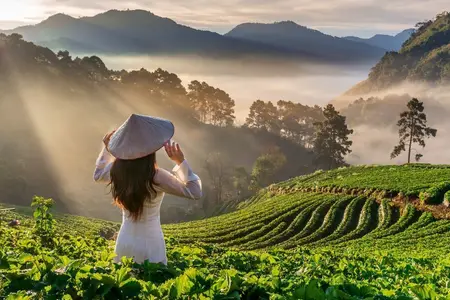
Imagine waking up to the smell of pho simmering in a street-side kitchen, hopping on a motorbike to zip through ancient alleyways, then watching the sun dip behind limestone karsts turning the sky pink and gold. That's Vietnam for you — a country that grabs you from the very first moment and simply refuses to let go.
Whether you're daydreaming about emerald rice terraces in the north, lantern-lit ancient towns in the centre, or lazy beach days in the south, Vietnam has it all packed into one long, slender, jaw-droppingly beautiful country. And the best part?
Planning your perfect Vietnam trip just got a whole lot easier. Zuumm builds personalized, ready-to-book Vietnam itineraries in seconds — tailored exactly to your travel style, budget, and bucket list.
Why Vietnam is a Must-Visit Destination from India
Here's the truth — Vietnam might just be the most underrated travel destination for Indian travellers right now. It's close, it's affordable, it's visually stunning, and it offers a cultural richness that genuinely rivals destinations far more expensive and far harder to reach.
Vietnam is one of those rare destinations where your rupee goes surprisingly far. A freshly made banh mi from a street stall can cost less than ₹50, while a comfortable hotel room in the heart of Hanoi can easily be found for under ₹2,000 a night. Even experiences like a private cruise in Ha Long Bay often cost just a fraction of what you might pay for a similar experience in Europe.
On top of that, the increasing number of direct flights from Delhi, Mumbai, Bangalore, and Hyderabad makes reaching Vietnam easier than ever — turning it into an effortless and irresistible choice for your next international getaway.

Vietnam for Every Kind of Traveler
The thing about Vietnam is that it doesn't cater to just one kind of traveller — it's more like it has a different version of itself for every person who visits.
-
Backpackers and budget travellers: Vietnam's hostel scene is lively, local street food is incredibly cheap, and there's no shortage of free temples, markets, and beaches to explore.
-
Honeymooners: Think candlelit dinners on Hoi An's riverside, private cruises through Ha Long Bay, and boutique beach resorts in Phu Quoc.
-
Families: From the history-rich streets of Hanoi to interactive cooking classes in Hoi An and water parks in Da Nang — kids and parents will both come home with wide eyes and full stomachs.
-
Adventure seekers: Trek remote mountain trails in Sapa, kayak through limestone caves in Ha Long Bay, or dive into the turquoise waters off Nha Trang.
-
Luxury travellers: Vietnam's boutique hotel scene has quietly become world-class. From ultra-luxury overwater villas in Phu Quoc to colonial heritage hotels in Hanoi, there's no shortage of ways to travel in style.
Why Indian Travelers Are Falling in Love with Vietnam
There's a particular magic about Vietnam that seems to resonate deeply with Indian travellers — and it goes beyond just the price tag.
For starters, Vietnam offers visa-on-arrival for Indian passport holders, making the logistics refreshingly simple. Then there's the food — while Vietnamese cuisine is predominantly seafood and meat-based, vegetarian options are widely available thanks to the country's strong Buddhist food culture. Tofu dishes, vegetable stir-fries, and rice-based meals are found in abundance, especially near temples and monasteries.
Vietnam's Buddhist heritage also strikes a familiar chord — the incense-filled pagodas, the colourful festivals, the spiritual reverence built into everyday life. And then there's the sheer warmth of Vietnamese people, who greet visitors with genuine hospitality that feels a lot like home.
Top Vietnam Tourist Attractions
Vietnam is long — really long. Stretching over 1,600 kilometres from north to south, the country is broadly divided into three distinct regions, each with its own personality, flavour, and highlights. Here's your guide to the must-visit cities and places.
Hanoi — Vietnam's Cultural & Historical Heart
If Ho Chi Minh City is Vietnam's beating pulse, then Hanoi is its soul. The capital city moves at a different pace — slower, more contemplative, steeped in history and old-world charm that you can almost feel in the air.
The best things to do in Hanoi revolve around its extraordinary layers of history. Start at the Hoan Kiem Lake — especially magical at sunrise when locals practise tai chi by the water — and cross the iconic red Huc Bridge to visit Ngoc Son Temple on a tiny island in the middle of the lake.
Don't miss Bun Cha — Hanoi's signature grilled pork noodle dish — at a local hole-in-the-wall spot.
Among the top places to visit in Hanoi is the Ho Chi Minh Mausoleum complex and the Vietnam Museum of Ethnology, which offers a fascinating window into the country's 54 ethnic groups. End your evenings on Ta Hien Street — also known as Beer Street — where plastic stools, cold bia hoi (fresh beer), and lively conversation await.
Ho Chi Minh City (Saigon) — The Modern, Buzzing Metropolis
Saigon never sleeps. The moment you step out into its streets, you're instantly swept up in a roaring, honking, deliriously energetic city that operates at full throttle around the clock.
The things to do in Ho Chi Minh City are as diverse as the city itself. History lovers should head straight to the War Remnants Museum — a sobering but essential stop that chronicles Vietnam's turbulent 20th century through powerful photography and artefacts. Equally moving is the Reunification Palace, where the Vietnam War officially ended on April 30, 1975.
For something lighter, Ben Thanh Market is a sensory overload in the best possible way — spices, street food, silk scarves, and souvenir shopping all crammed into one buzzing space. When the sun goes down, take an elevator to one of Saigon's rooftop bars for sweeping views of the glittering skyline.
No visit to Saigon is complete without a day trip to the Cu Chi Tunnels — an extraordinary 250-kilometre underground network used by Viet Cong soldiers during the war. You can actually crawl through sections of the tunnels, which makes for an unforgettable (and slightly claustrophobic) experience.
Hoi An — The Ancient Town Frozen in Time

There is nowhere in Vietnam — perhaps nowhere in Southeast Asia — quite like Hoi An. This UNESCO World Heritage town looks exactly as you'd imagine a fairytale Vietnamese trading port from the 15th century would look, except it's real, it's alive, and it's absolutely breathtaking.
Walking through Hoi An's Ancient Town at night is something you genuinely never forget. Hundreds of silk lanterns in every colour imaginable cast a warm, golden glow over the narrow streets. The Thu Bon River reflects the lights like a mirror. Tailor shops stay open late, offering custom-made ao dai and suits within 24 hours at prices that seem almost too good to be true.
The Japanese Covered Bridge — the town's most iconic symbol — dates back to the 18th century and is best photographed at dawn before the crowds arrive.
Take a cooking class with a local family, cycle out to the rice paddies at An Bang, or simply sit at a riverside cafe with a Vietnamese coffee and watch the world go gently by. Hoi An rewards slow travellers more than almost anywhere else on earth.
Da Nang — Beaches, Bridges & the Gateway to Central Vietnam
Da Nang is the modern, ambitious younger sibling in the central Vietnam family — and it's quietly becoming one of the country's most exciting cities to visit.
My Khe Beach is the headline act — a long, wide stretch of white sand and clear blue water that consistently ranks among Asia's best beaches. Surf schools line the shore, and the beach bars are perfect for sundowners.
Just a 30-minute drive away, the Marble Mountains are a cluster of five marble and limestone hills, each named after one of the five elements. Hidden inside are ancient Buddhist sanctuaries, caves, and panoramic viewpoints over the coast. It's one of those places that completely sneaks up on you.
Hue — Vietnam's Imperial Capital
Hue is where Vietnam's royal soul lives. Once the seat of the Nguyen Dynasty — Vietnam's last imperial dynasty — this city along the Perfume River is packed with royal tombs, crumbling citadels, and a culinary tradition so refined it was once reserved exclusively for the emperor's table.
And the food — Hue cuisine deserves its own paragraph. Bun Bo Hue (spicy beef noodle soup), Banh Khoai (crispy pancakes), and the incredibly intricate Banh It Tran dumplings are dishes you won't find done better anywhere else in Vietnam. For food lovers, Hue is a pilgrimage.
Outdoor Activities & Adventures in Vietnam
Vietnam's geography is an adventure playground — dramatic mountain ranges in the north, karst-studded bays on the coast, river deltas in the south. Here are three outdoor experiences that belong on every adventurous traveller's list.
Trekking in Sapa
In the far northwest of Vietnam, close to the Chinese border, Sapa is a world unto itself. At an elevation of 1,600 metres, this misty mountain town is surrounded by some of the most spectacular scenery in Southeast Asia — terraced rice paddies that cascade down impossibly steep hillsides, dramatic valleys, and the imposing Fansipan peak (the highest mountain in Indochina at 3,147 metres).
Trekking in Sapa is one of the most popular things to do in Vietnam, and for good reason. Having a local guide makes an enormous difference — they'll explain the farming traditions, share stories, and take you off the beaten path entirely.
If trekking isn't your style, you can still reach the summit of Fansipan via cable car — a 20-minute ride that delivers mind-bending views across the entire Hoang Lien Son mountain range.
Kayaking in Ha Long Bay
Ha Long Bay needs no introduction — it's one of the most photographed places on earth, and it earns every pixel. Nearly 2,000 limestone karsts and islands rise from the emerald waters of the Gulf of Tonkin, creating a landscape so otherworldly it was named a UNESCO World Heritage Site twice.
While cruise boats are the classic way to experience Ha Long, kayaking through the bay is where the real magic happens. Paddle into hidden lagoons accessible only by ducking through low cave passages at low tide. Glide silently past floating fishing villages where families have lived on the water for generations. Explore sea caves like Hang Sung Sot (Surprise Cave) by paddling right inside.
For a quieter, less touristy alternative, consider Bai Tu Long Bay or Lan Ha Bay nearby — equally beautiful, with far fewer boats.
Cycling Through the Mekong Delta
The Mekong Delta in southern Vietnam is the country's rice bowl — a vast, flat, impossibly green landscape of rice paddies, fruit orchards, coconut groves, and waterways so dense you wonder if the land or the water is in charge.
Cycling is the perfect way to experience the delta. On two wheels, you can weave through narrow paths between rice fields that no car or bus could ever reach, stop at a floating market where vendors sell pineapples and dragon fruit from wooden boats, visit a coconut candy factory, or simply pedal in silence as egrets drift overhead and the only sound is the soft rustle of palm leaves.
The towns of Can Tho and Ben Tre make excellent bases. Combine cycling with a boat ride through the canals for a full delta experience that feels a million miles from the tourist trail.
Best Beaches & Islands in Vietnam
Vietnam's coastline stretches for over 3,000 kilometres, which means the beach options are almost embarrassingly good. Here are three islands that belong on your radar.
Phu Quoc Island — Tropical Getaway
Phu Quoc is Vietnam's largest island, — a tropical paradise of white sand beaches, swaying palms, and turquoise waters that seem to glow. Long Beach and Sao Beach are the most popular stretches, but the island's northern and southern tips still offer quiet, undiscovered coves if you're willing to explore.
The island has evolved rapidly over the last decade from a sleepy fishing outpost into a world-class resort destination, with international hotel brands, a cable car that crosses the ocean to a private island entertainment complex, and a thriving night market in Duong Dong town.
Nha Trang — Diving & Water Sports
Nha Trang is Vietnam's diving capital — a crescent-shaped bay ringed by mountains, with clear waters and over 25 dive sites within easy reach. The waters around nearby Hon Mun Marine Protected Area are some of the most biodiverse in Southeast Asia, with vibrant coral reefs, sea turtles, and a dazzling variety of fish.
But Nha Trang isn't just for divers. Snorkelling, jet skiing, parasailing, and island-hopping boat trips are all wildly popular. The city's beachfront promenade is lively and walkable, lined with restaurants, bars, and seafood stalls. Vinpearl Land, a massive entertainment and water park on a nearby island (reached by the world's longest overwater cable car), is a huge hit with families.
Con Dao Islands — Secluded & Serene
The Con Dao Islands are Vietnam's best-kept secret. An archipelago of 16 islands about 230 kilometres off the southern coast, Con Dao remains blissfully uncrowded — there are no package tours, no tuk-tuks, no selfie sticks on every corner. Just pristine beaches, dense jungle, sea turtle nesting sites, and some of the best diving in Vietnam.
Con Dao carries a heavy history — it was the site of Vietnam's most infamous colonial prison, and visiting the museum and jail complex is a humbling experience. But the natural beauty is extraordinary. Green turtles nest on the beaches between July and October, and the national park covers most of the islands. If you want Vietnam without the crowds, Con Dao is your answer.
Vietnam Itinerary Ideas — 7 Days, 10 Days & 2 Weeks
Not sure how to structure your Vietnam trip? Here are three ready-to-use itineraries to help you plan. And remember — Zuumm can personalise any of these based on your interests, budget, and travel pace in seconds.
7-Day Vietnam Itinerary — The Essential North-to-South Highlights
Days 1–2: Hanoi
Start your Vietnam journey in Hanoi, exploring the lively Old Quarter, visiting the serene Hoan Kiem Lake and Ngoc Son Temple, and paying respects at the Ho Chi Minh Mausoleum. In the evenings, dive into Hanoi’s famous street food scene with a guided food tour.
Day 3: Ha Long Bay
Travel to Ha Long Bay for an unforgettable overnight cruise. Enjoy kayaking through the dramatic limestone karsts, explore hidden caves, and watch a magical sunset from the deck.
Day 4: Da Nang
Fly to Da Nang and check into your hotel before heading to the Marble Mountains for panoramic views and cave temples. Spend a relaxed evening strolling along the beautiful My Khe Beach.
Days 5–6: Hoi An
Discover the charm of Hoi An’s Ancient Town, famous for its lantern-lit streets and historic architecture. Take a Vietnamese cooking class, visit local tailors, and unwind at the laid-back An Bang Beach.
Day 7: Ho Chi Minh City
Fly to Ho Chi Minh City and explore the bustling Ben Thanh Market for local shopping and street food. End your trip with a drink at a rooftop bar before departing.
10-Day Vietnam Itinerary — Culture, Nature & Beaches
Days 1–2: Hanoi
Begin your Vietnam adventure in Hanoi, exploring the bustling Old Quarter, visiting fascinating museums, and soaking in the city’s vibrant atmosphere. In the evening, pull up a tiny stool at the famous bia hoi corner and enjoy fresh local draft beer like a true local.
Days 3–4: Ha Long Bay
Head to Ha Long Bay for an overnight cruise through its spectacular limestone karsts. Spend your time kayaking between the rock formations, exploring hidden caves, and enjoying a peaceful sunset and sunrise over the emerald waters.
Day 5: Hue
Travel to the historic city of Hue and step into Vietnam’s imperial past. Visit the grand Imperial Citadel, explore the ornate royal tombs, and take a relaxing boat ride along the scenic Perfume River.
Day 6: Hue to Da Nang
Start the day with a Hue food trail, tasting the city’s famous royal-inspired cuisine and local street dishes. Later, travel to Da Nang, enjoying the scenic coastal route along the way.
Days 7–8: Hoi An
Spend time in the charming town of Hoi An, wandering through its lantern-lit Ancient Town and relaxing at nearby beaches. You can also explore the surrounding countryside on a cycling trip through rice fields and quiet villages.
Day 9: Ho Chi Minh City
Fly to Ho Chi Minh City and dive into its powerful history at the War Remnants Museum. Take a day trip to the Cu Chi Tunnels to understand the underground network used during the Vietnam War.
Day 10: Saigon
Enjoy your final day in Saigon indulging in one last street food feast and exploring the city’s bustling local markets. Wrap up your Vietnam journey before flying back home.
2-Week Vietnam Itinerary — The Complete Deep Dive
Days 1–2: Hanoi
Begin your Vietnam journey in Hanoi, exploring the vibrant Old Quarter, peaceful Hoan Kiem Lake, and the city’s fascinating museums and temples. In the evenings, dive into Hanoi’s legendary street food scene and soak up the lively local atmosphere.
Days 3–4: Sapa
Travel to the misty mountains of Sapa for scenic trekking through rice terraces and ethnic minority villages. You can also take the cable car to Fansipan, known as the “Roof of Indochina,” for breathtaking panoramic views.
Days 5–6: Ha Long Bay
Head to Ha Long Bay for an unforgettable overnight cruise among its dramatic limestone karsts. Enjoy kayaking, cave exploration, fresh seafood on board, and magical sunsets over the emerald waters.
Day 7: Hue
Fly to the historic city of Hue and explore the grand Imperial Citadel, once home to Vietnam’s royal dynasty. Visit the beautifully designed royal tombs and sample the city’s famous imperial-style cuisine.
Day 8: DMZ & Phong Nha
Take a day trip to the historic DMZ area to learn about Vietnam’s wartime past. Continue to Phong Nha to explore some of the region’s spectacular caves and dramatic natural landscapes.
Days 9–10: Hoi An
Spend two relaxing days in the charming town of Hoi An, wandering through its lantern-lit Ancient Town and relaxing at nearby beaches. You can also take a day trip to My Son Sanctuary, a fascinating complex of ancient Cham temple ruins.
Day 11: Da Nang
Visit the coastal city of Da Nang, known for its long sandy beaches and modern skyline. Don’t miss the iconic Dragon Bridge and enjoy a laid-back evening by the sea.
Days 12–13: Ho Chi Minh City
Fly to Ho Chi Minh City and explore the city’s dynamic mix of history and modern life. Visit the Cu Chi Tunnels to understand the underground war network and take a day trip to the Mekong Delta to experience river life and floating markets.
Day 14: Phu Quoc
End your Vietnam adventure on the tropical island of Phu Quoc. Relax on its white-sand beaches, enjoy fresh seafood, and soak in the island’s calm before flying back home.
Want a personalised version of any of these itineraries? With Zuumm, you can generate a custom Vietnam travel plan in seconds. Simply enter your travel dates, interests, and budget — and let the platform create a ready-to-book itinerary tailored just for you.
Frequently Asked Questions
Explore Hanoi’s temples, cruise through Ha Long Bay, wander Hoi An’s lantern streets, trek Sapa’s mountains, relax on Phu Quoc beaches, and dive into Saigon’s vibrant street food scene.
7 days covers key highlights, 10 days is ideal for a north-to-south trip, and 14 days lets you explore Vietnam more deeply.
November to April is generally the best time, with pleasant weather across most regions.
Yes, Vietnam is very budget-friendly, with great food, stays, and experiences available even on ₹3,000–₹4,000 per day.
Must-try dishes include pho, banh mi, bun bo hue, cao lau, banh xeo, and Hanoi’s famous egg coffee.
Both are amazing, but Vietnam offers greater diversity in landscapes, culture, and travel experiences.