
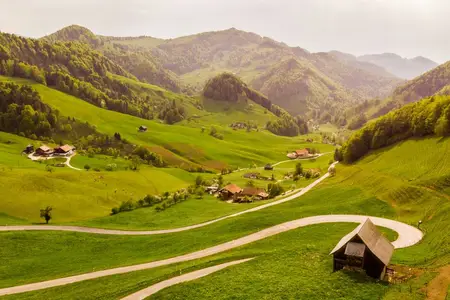
There are countries you visit, and then there is Switzerland — a place that genuinely makes you stop mid-step, look around, and wonder if any of it is real. Snow-dusted peaks touching the clouds, mirror-still lakes reflecting tiny pastel towns, trains that glide like clockwork through valleys so green they hurt your eyes. Switzerland is one of those rare destinations that delivers on every single promise it makes in the brochure — and then goes several miles beyond.
But here is the thing most people do not tell you: Switzerland can feel overwhelming to plan, especially if it is your first time. It is small on the map but enormous in experiences. Between the German, French, and Italian regions, the ski resorts and the lakeside cities, the budget traps and the hidden gems, there is a lot to navigate. That is exactly why this Switzerland travel guide exists — to give you everything you need, laid out clearly, so you can focus on the actual magic of being there.
Whether you are planning a 5-day sprint or a 10-day deep dive, travelling solo, with a partner, or with the family, this guide covers it all. Let us get into it.
What Are the Best Places to Visit in Switzerland for Tourists?
Switzerland is divided into distinct cultural regions — the German-speaking north and centre, the French-speaking west, and the Italian-speaking south. Each one feels like a different country, which is part of what makes this place so endlessly fascinating. You can genuinely go from an Oktoberfest-style beer hall in Zurich to sipping espresso in the sunshine in Lugano within a couple of hours.

Which Cities in Switzerland Should You Not Miss?
Zurich is your most likely entry point, and honestly, it deserves more than the transit-city treatment most travellers give it. The old town, known as Altstadt, is a genuinely beautiful maze of cobbled lanes, guild houses, and quiet riverside cafes. The Bahnhofstrasse is one of the world's great shopping streets, but even if luxury brands are not your thing, the lake views at the end of it will stop you in your tracks. Zurich also has one of the best food scenes in the country — from street-level bratwurst at Sternen Grill (a Zurich institution) to Michelin-starred tasting menus.
Geneva sits right on the western edge of the country, straddling the French border, and it carries that Franco-Swiss elegance effortlessly. The Jet d'Eau, the famous water fountain shooting 140 metres into the air on Lake Geneva, is the city's most iconic image — but the old town, the flower clock in the English Garden, and the world-class chocolate shops are what make you want to stay longer. Geneva is also the diplomatic capital of the world in many ways, home to the UN, the Red Cross, and dozens of international organisations.
Lucerne, though, is the one that tends to steal hearts. Compact, walkable, and ridiculously photogenic, Lucerne is built around a lake with a mountain backdrop that feels almost theatrical. The Chapel Bridge, a 14th-century wooden covered bridge painted with historical scenes, is the most photographed structure in Switzerland, and it earns that status every single day. From Lucerne you can reach Mount Rigi or Mount Pilatus in under an hour — making it the perfect base for Alpine day trips.
Bern, the federal capital, often gets overlooked but should not be. Its sandstone arcades, bear pits, and rose gardens have a calm, confident charm. The clock tower, called Zytglogge, puts on an hourly puppet show that adults will enjoy just as much as kids.
Basel, in the north-west corner where Switzerland meets France and Germany, is a cultural powerhouse. The city hosts Art Basel, the world's most important contemporary art fair, and has more museums per capita than almost anywhere in Europe. The Rhine splits the city, and locals famously swim downstream in the river during summer — it is a tradition you should absolutely join.
What Are the Most Beautiful Villages in Switzerland?
If cities are the country's confident face, the villages are its soul. And Switzerland's villages are on another level entirely.
Zermatt is the one most people know, sitting at the foot of the Matterhorn — one of the most recognised mountain silhouettes on the planet. The village is car-free, which gives it a remarkably peaceful atmosphere for how popular it is. Electric taxis and horse-drawn carriages are your transport options here. In winter it is ski central, in summer, it is one of the best hiking bases in the Alps with over 350 km of marked trails. Timing your morning walk to catch the Matterhorn glowing pink at sunrise is something you will not forget quickly.
Interlaken sits between two lakes — Thunersee and Brienzersee — with the Jungfrau mountain group as its dramatic backdrop. It is the adventure capital of Switzerland- paragliding, canyoning, skydiving, and white-water rafting are all on the menu here. Even if extreme sports are not your thing, the train ride from Interlaken up to Jungfraujoch — at 3,454 metres, the highest railway station in Europe — is one of the great train journeys of the world.
Grindelwald, just up the valley from Interlaken, is where you go when you want Interlaken's mountain drama with slightly fewer party tourists. The village sits directly beneath the Eiger north face, which is a genuinely imposing sight. The First Cliff Walk, a steel walkway bolted to a cliff edge above the village, is one of those experiences that makes your palms sweat and your Instagram pop simultaneously.
Montreux, on Lake Geneva's eastern shore, has a French Riviera energy that feels completely at odds with its Alpine setting — in the best possible way. The Freddie Mercury statue on the lakefront promenade is a pilgrimage point for Queen fans. The Montreux Jazz Festival in July is legendary. And the Chateau de Chillon, a medieval island castle accessible by foot along the lakeshore, is one of the best-preserved fortresses in Europe.
What Is the Best Time to Visit Switzerland for Travel?
The honest answer is, Switzerland is worth visiting in every season, but each one gives you a completely different country. Your ideal timing depends entirely on what you have come to do.
Is Switzerland Better in Summer or Winter?
Summer, roughly June through August, is peak Switzerland for most travellers — and for good reason. The mountain trails are open, the lakes are warm enough to swim in, the cable cars run to their highest points, and the daylight hours are long and generous. Temperatures in the valleys hover around a pleasant 20 to 28 degrees Celsius. This is the best time for hiking, cycling, and exploring the villages. It is also the most expensive season and the most crowded at major spots like Jungfraujoch and Zermatt.
Winter, from December through February, transforms Switzerland into one of the world's great ski destinations. Verbier, Zermatt, St. Moritz, Davos, Crans-Montana — these are names that mean something in the skiing world. Even if you do not ski, the snow-covered villages, the fondue culture, and the Christmas markets (especially in Basel, Zurich, and Bern) create an atmosphere that is genuinely magical. The flip side: prices are extremely high during peak ski weeks, and many mountain roads close.
The shoulder seasons — April to May and September to October — are arguably the best kept secret in Swiss travel. The crowds thin out noticeably, the prices drop, and the landscapes are stunning in different ways. Spring brings wildflowers to the meadows and snowmelt to the waterfalls; autumn turns the hills amber and gold. The weather is less predictable but also less brutal, and you will have popular spots almost to yourself on weekdays.
How to Plan a Switzerland Itinerary for 5 to 7 Days?
Switzerland rewards planning. The country is small — you can cross it by train in under four hours — but it is so densely packed with experiences that a week genuinely flies by. Here is how to make the most of a 5 to 7 day trip.
Day 1 and 2: Arrive in Zurich. Spend your first day walking the old town, crossing the Limmat River, visiting the Grossmunster and Fraumunster churches. On day two, take the short trip to Rhine Falls — the largest waterfall in Europe — and return via the medieval town of Stein am Rhein.
Day 3: Train to Lucerne. This is one of the most beautiful train rides in the country. Spend the afternoon walking the Chapel Bridge, exploring the old town walls, and taking the evening cogwheel railway up to Pilatus if the weather is clear.
Day 4: Travel to the Interlaken and Jungfrau region. Arrive mid-morning and take the afternoon train up to Jungfraujoch. The journey through the Eiger tunnel and the views from the top — when the clouds cooperate — are extraordinary.
Day 5 and 6: Head to Zermatt via a scenic train connection. These two days are for slowing down: hiking, riding the Gornergrat railway for Matterhorn views, exploring the car-free village, and eating well.
Day 7: Optional extension toward Geneva or Montreux. The lake-side train from Lausanne to Geneva is one of the most beautiful rail journeys in western Switzerland, running through vineyards and along the shore of Lake Geneva.
How Many Days Are Enough for Switzerland Travel?
Five days is the absolute minimum if you want to see more than two regions. Seven days is the sweet spot for first-timers — enough time to cover the Zurich and Lucerne area, the Jungfrau region, and Zermatt without feeling completely rushed. Ten days lets you add Geneva, Montreux, and possibly Lugano in the Italian-speaking south. Two weeks allows a genuinely thorough exploration of all four linguistic regions.
If you only have three or four days, pick one region and go deep. Better to do Lucerne and the Jungfrau region properly than race through five cities and feel like you saw everything from a train window.
What Is the Cost of Traveling in Switzerland on a Budget?
Let’s address the obvious: Switzerland is expensive — not just tourist-level pricey, but one of the costliest countries in the world. A coffee in Zurich costs around ₹600–₹700, a mid-range lunch ranges from ₹3,000–₹4,700, and even a hostel dorm can be ₹4,700–₹7,100 per night. Budget travel is possible, but it requires careful planning.
How Should You Budget?
The Switzerland Travel Pass is the single most important decision in your budget planning. The Swiss Travel Pass gives you unlimited travel on trains, buses, and boats across the entire network, plus free entry to over 500 museums and discounts on mountain railways. For a 7-day trip, a Flex Pass works out significantly cheaper than buying individual tickets, especially if you are planning to visit Jungfraujoch, Gornergrat, and Pilatus.
On food, supermarkets are your best friend. Migros and Coop are everywhere and have excellent ready-to-eat sections, bakery counters, and fresh produce at reasonable prices. A prepared meal from Migros costs 8 to 12 Francs — about the same as what you would pay for just a coffee and a small pastry at a tourist cafe. Self-catering even one meal a day makes a substantial difference across a week.
For accommodation, hostels in Switzerland are genuinely excellent. Swiss Youth Hostels are clean, well-located, and often in beautiful buildings. Airbnb can offer good value, especially for groups. If you are booking hotels, look at options slightly outside the main tourist centres — a hotel a 10-minute train ride from Interlaken will often cost 40 to 50 percent less than one in the centre.
The average cost of a 7-day trip to Switzerland for a budget-conscious traveller runs around 800 to 1,000 Francs all-in, excluding flights. A comfortable mid-range trip lands between 1,800 and 2,500 Francs. For Indian travellers, the current CHF to INR rate means budgeting approximately INR 95,000 to 1,20,000 for a budget week, and INR 2,00,000 to 3,00,000 for a comfortable mid-range experience. Booking your flights through ZUUMM with zero convenience fees already gives you a meaningful head start on the savings side.
What Are the Best Things to Do in Switzerland?
Switzerland is not a country you experience primarily through museums and monuments. The main event is the landscape itself — and the dozens of ways the Swiss have engineered access to it.
- Ride the Glacier Express: This is the world's slowest express train, running 8 hours between St. Moritz and Zermatt through 91 tunnels and 291 bridges. The panoramic carriages are designed for maximum scenery. Book in advance and spring for the premium dining car.
- Hike the Eiger Trail: A 4-hour hike from Eigergletscher station to Grindelwald, running directly beneath the Eiger north face. The trail is not technically difficult but absolutely spectacular. You can hear the mountain groaning and shedding rock as you walk.
- Swim in Lake Geneva or Lake Zurich: Swimming in Swiss lakes is a deeply local activity and one of the great free pleasures of summer travel here. The water is extraordinarily clean — you can drink it — and the mountain backdrop makes every swim feel cinematic.
- Take the Gornergrat Railway: This is arguably the best view of the Matterhorn available from any public transport. The rack railway climbs from Zermatt to 3,089 metres and puts you face to face with the mountain and the Gorner Glacier.
- Eat Swiss fondue in an actual Swiss chalet: This is not a tourist cliche — it is a genuinely excellent meal. In Gruyeres, the town that gave the world Gruyere cheese, you can eat fondue in a medieval castle. Raclette, where cheese is melted and scraped over potatoes, is equally delicious.
- Visit Chaplin's World in Vevey: Charlie Chaplin spent the last 25 years of his life in Vevey, and his former estate is now one of the most creative museums in Europe. It is a delightful half-day trip from Montreux or Lausanne.
- Paraglide from Interlaken: A tandem paragliding flight over the Interlaken valley, with the Jungfrau group in front of you and two lakes on either side, is the kind of experience that rewires your brain. It costs around 170 to 200 Francs and takes about 20 minutes in the air.
What Are the Best Ways to Get Around Switzerland?
Switzerland has possibly the best public transport system in the world. That is not an exaggeration — it is a point of genuine national pride, and the Swiss take train punctuality more seriously than most countries take their entire transportation policy.
- Swiss Travel Pass: As mentioned above, this is the gold standard for tourist travel. Unlimited trains, buses, boats, and most city transport, plus museum discounts. Available for 3, 4, 6, 8, or 15 consecutive days, or as a Flex Pass for non-consecutive days.
- Trains: The backbone of Swiss travel. SBB (Swiss Federal Railways) runs an extraordinarily punctual network connecting every significant town. Scenic routes like the Bernina Express, Golden Pass, and Gotthard Panorama Express are in a class of their own.
- Boats: Included in the Swiss Travel Pass, the lake boats are a beautiful way to travel between lakeside towns. The boat from Lucerne across the lake, or along Lake Geneva between Lausanne and Montreux, are genuinely lovely journeys.
- Mountain Railways and Cable Cars: Most are partially or fully covered by the Swiss Travel Pass. The Jungfrau Railway, Gornergrat, Pilatus, and Rigi are the big names. Book popular ones in advance, especially in summer.
- Renting a Car: Not necessary if you are sticking to the main tourist circuit, but useful for exploring smaller valleys and villages off the rail network. Roads are impeccably maintained. Note that some mountain villages like Zermatt and Wengen are car-free.
What Travel Tips Should You Know Before Visiting Switzerland?
Switzerland rewards those who come prepared. A few things that will save you money, frustration, and confusion.
What Documents and Essentials Do You Need?
- Schengen Visa: Indian passport holders need a Schengen visa for Switzerland. Apply at the Swiss Embassy or a VFS Global centre at least 4 to 6 weeks before travel. Switzerland is part of the Schengen Area, so a valid Schengen visa issued by another Schengen country also works.
- Travel Insurance: Non-negotiable for Switzerland. Medical costs here are extraordinarily high. Mountain rescue alone can cost thousands of Francs. Make sure your policy covers adventure activities if you plan to ski, paraglide, or hike at altitude.
- Currency: Switzerland uses the Swiss Franc (CHF), not the Euro, though many tourist places near the borders accept Euros at a poor exchange rate. Use a multi-currency card like Niyo or Wise to avoid conversion fees. ATMs are widely available.
- Packing: Layer up regardless of season. Mountain weather changes fast and dramatically — what starts as a sunny morning hike can end in sleet by afternoon. A good waterproof jacket is essential. Comfortable walking shoes (ideally waterproof) will carry you through most activities.
- Plugs: Switzerland uses Type J plugs, which are unique to Switzerland (not used elsewhere in Europe). Bring a universal adapter.
What Should You Avoid Doing in Switzerland?
- Do not assume the Euro works everywhere. It does not, and tourist-area Euro acceptance often comes with a 10 to 15 percent penalty on the exchange rate.
- Do not buy point-to-point tickets for long journeys if you are doing more than two train trips a day. The Swiss Travel Pass pays for itself faster than most people expect.
- Do not skip the shoulder season just because it is not summer or ski season. September in the Swiss Alps is one of the most beautiful things you will see in your life.
- Do not try to pack too many destinations into one day. Swiss trains are fast, but the travel between experiences takes time, and rushing through this country is genuinely painful.
- Do not be noisy in residential areas late at night, especially on Sundays. The Swiss take quiet hours very seriously. In some places there are rules against flushing toilets or taking showers after 10pm in apartment buildings.
- Do not eat at restaurants directly on the main tourist squares if budget is a concern. Walk two or three streets back and prices drop noticeably.
Frequently Asked Questions
Yes, it’s expensive, but a budget trip is possible at ₹10,000–₹15,000/day, while mid-range travellers should plan ₹25,000–₹35,000/day.
July–August for overall travel, Jan–Feb for skiing, Sep–Oct for fewer crowds, and December for Christmas vibes.
7 days is ideal, 5 days works for a quick trip, and 2 weeks gives a complete experience.
Yes, a Schengen visa is required, usually processed in 10–15 working days.
Use a Swiss Travel Pass, eat from supermarkets, stay in hostels, and rely on public transport.
Lucerne is best for first-timers, Zurich for city vibes, and Geneva for a French-influenced experience.
Yes, it’s extremely safe with low crime and reliable public transport.
The Swiss Franc (CHF) is the official and widely used currency.
Yes, the public transport system is excellent and a car is unnecessary.
German, French, Italian, and Romansh are official languages, with English widely spoken in tourist areas.